
Session Highlights
Developing Leaders / Session 3
New York City · October 2026
The Pacers
In 2019, Eliud Kipchoge ran the first marathon under two hours with 41 pacers rotating around him. Some were world champions. None of them were there to win. Leaders are pacers. Your result is someone else’s time, and your job ends when they can run the last stretch without you.
Name the Multipliers
(Skill, Standards, Belief / Development Diagnosis)
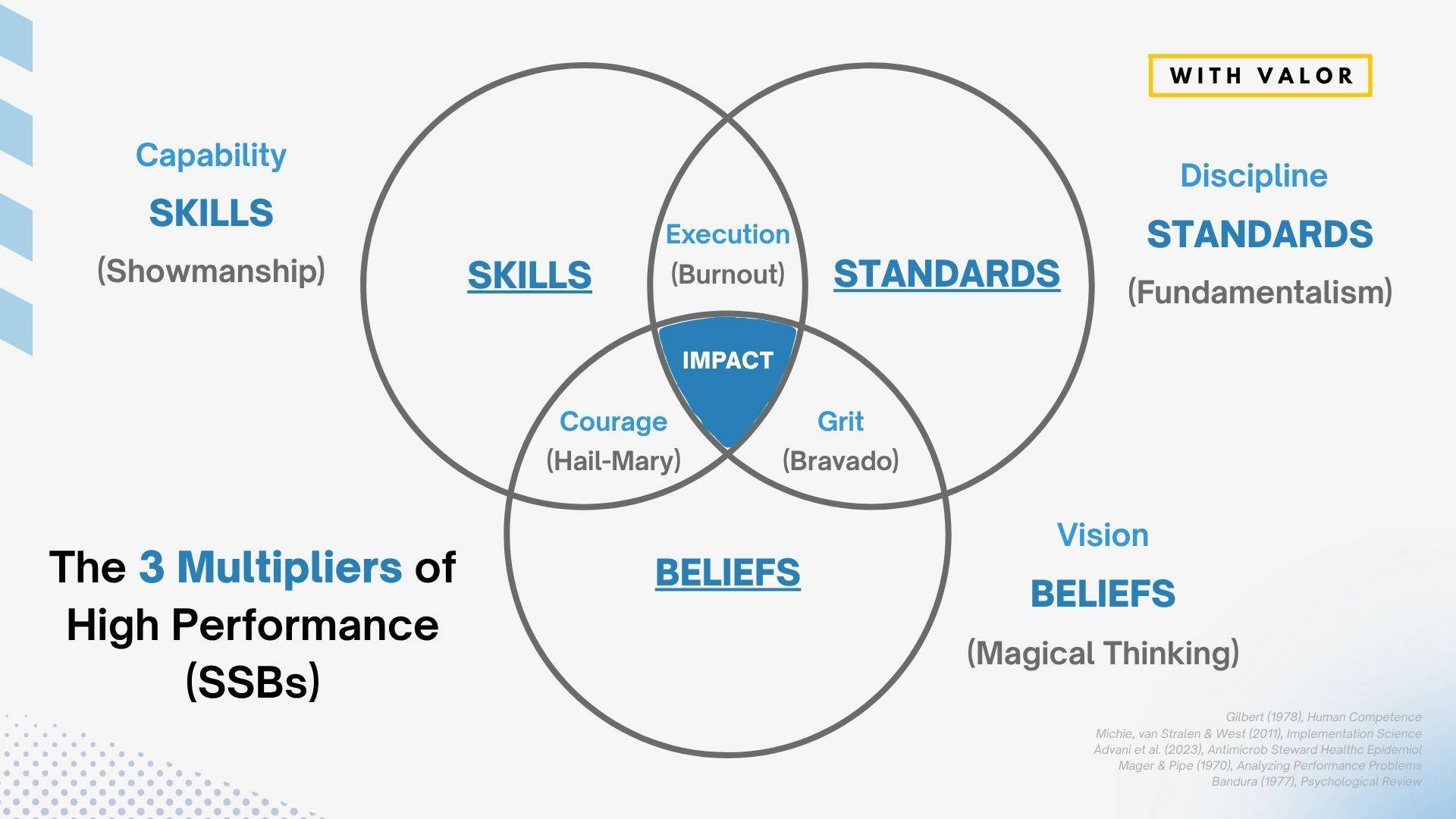
Capable people stall for predictable reasons. Skill is what they can do. Standards are the environment that makes good work repeatable. Belief is what they think is possible. The three multiply, so when one drops to zero, so does everything else. Name the missing one before you try to fix it.
Read the Race
(Zone Patterns / People Acuity)
Every gap shows up as a pattern. Hitting numbers while running on fumes points to Belief. Heroic wins nobody can repeat point to Standards. Big promises with missed delivery point to Skill. Read the person and the seat together, then decide whether to push the pace or ease off.
Pace the Gap
(The Handoff / Deliberate Challenge and Feedback as Development)
Runners are responsible for their time. Pacers are responsible to the runner. Ownership moves one step at a time: I do, you watch. I do, you help. You do, I help. You do, I watch. You do, someone else watches. Most leaders jump from the first step to the fifth. Your fifth step is someone else’s first.
Cross-Functional Decision-Making / Session 2
Bellevue · July 2026
Clarity, Trust, Dialogue
Cross-functional decisions stall for one of three reasons: people don't understand what's actually being decided, they don't trust the people deciding it, or the conversation never gets past positions to the real need. Everything below traces back to one of these three.
Own the Story
(Narrative Ownership / Perspective Agility)
Before you can resolve a cross-functional conflict, you have to see it from the other function's perspective. Own the Story means naming your own narrative honestly, then doing the same for theirs, before either side tries to be right.
Find the Need
(Productive Conflict / Nonviolent Communication)
Positions collide. Needs don't have to. Map the Needs, built on Rosenberg's NVC framework, moves the conversation off "what I want" and onto "what I actually need," which is almost always more negotiable.
Make the Call
(Psychological Safety / Integrative Thinking)
Every voice heard, every criterion on the table. Make the Call means using what you gathered to make a data-driven decision, then recording the call and what happens next. Not to cover yourself. To learn from it.
Decide and Commit
The room doesn't need to agree. It needs to commit. Voice your disagreement openly, then back the decision 100% once it's made, in effort and follow-through. Disagreement stops the moment the call is made.
Strategic Thinking / Session 1
Daytona Beach · June 2026
Greiner's Growth Model
Every company passes through predictable growth stages, and each stage creates a new crisis. A company's position on that curve shapes what you, the leader, need to do next. Your job isn't just solving today's problems. It's seeing the next one before it arrives.
Read the Pattern
(Iceberg Model / Whole-System Awareness)
Most of what drives organizational behavior isn't visible. Beneath every surface problem (performance gaps, misalignment, missed deadlines) are patterns, structures, and mental models keeping that problem in place. Read the pattern before you react to the symptom.
Hold the Horizon
(Three Horizons / Multi-Horizon Thinking)
Strategic leaders hold three timeframes at once: what's running now, what's being built, and what's being bet on. Collapse them into one and you're always in firefighting mode.
Make the Trade
(Strategic Filter / Strategic Trade-offs)
Every real decision is a trade. The filter we built together (Direction, Possibility, Cost) stops you from circling a decision and helps you commit to one.
Session Resources
For each, click on 'File', then 'Make a Copy' to download.
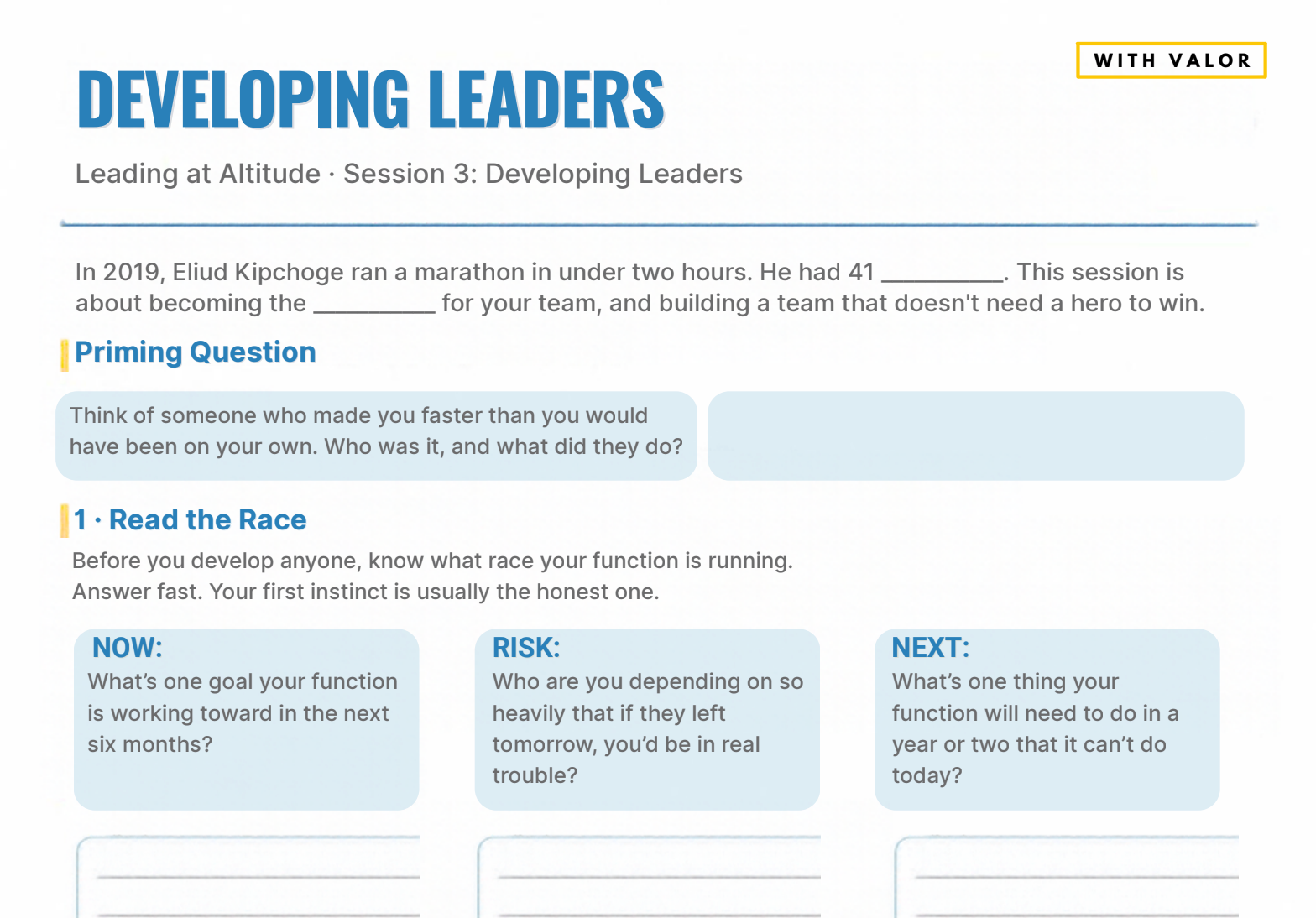
Developing Leaders Worksheet
A quick-reference tool built from Session 3.
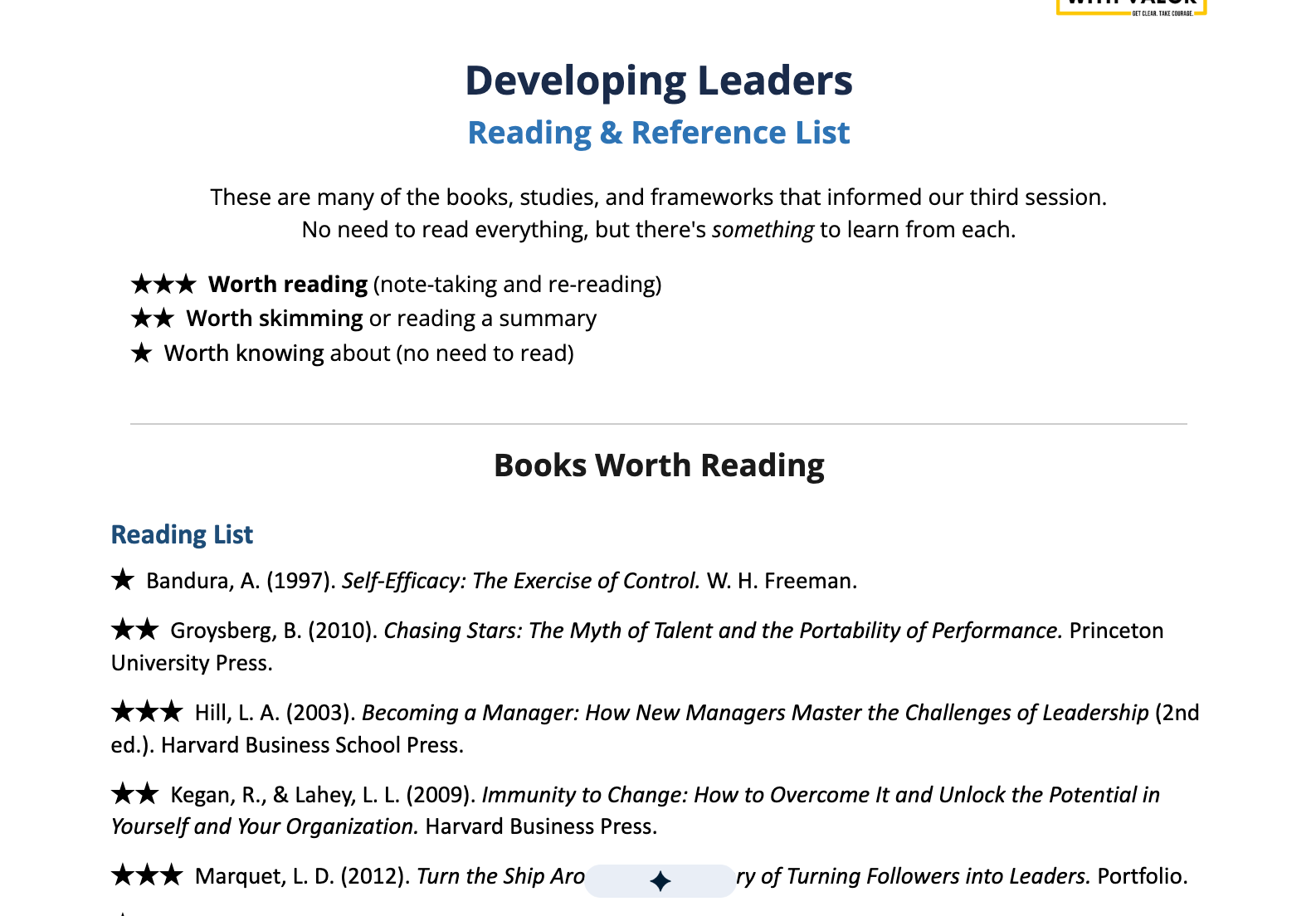
Developing Leaders
Reading List
The books and research behind session 3.
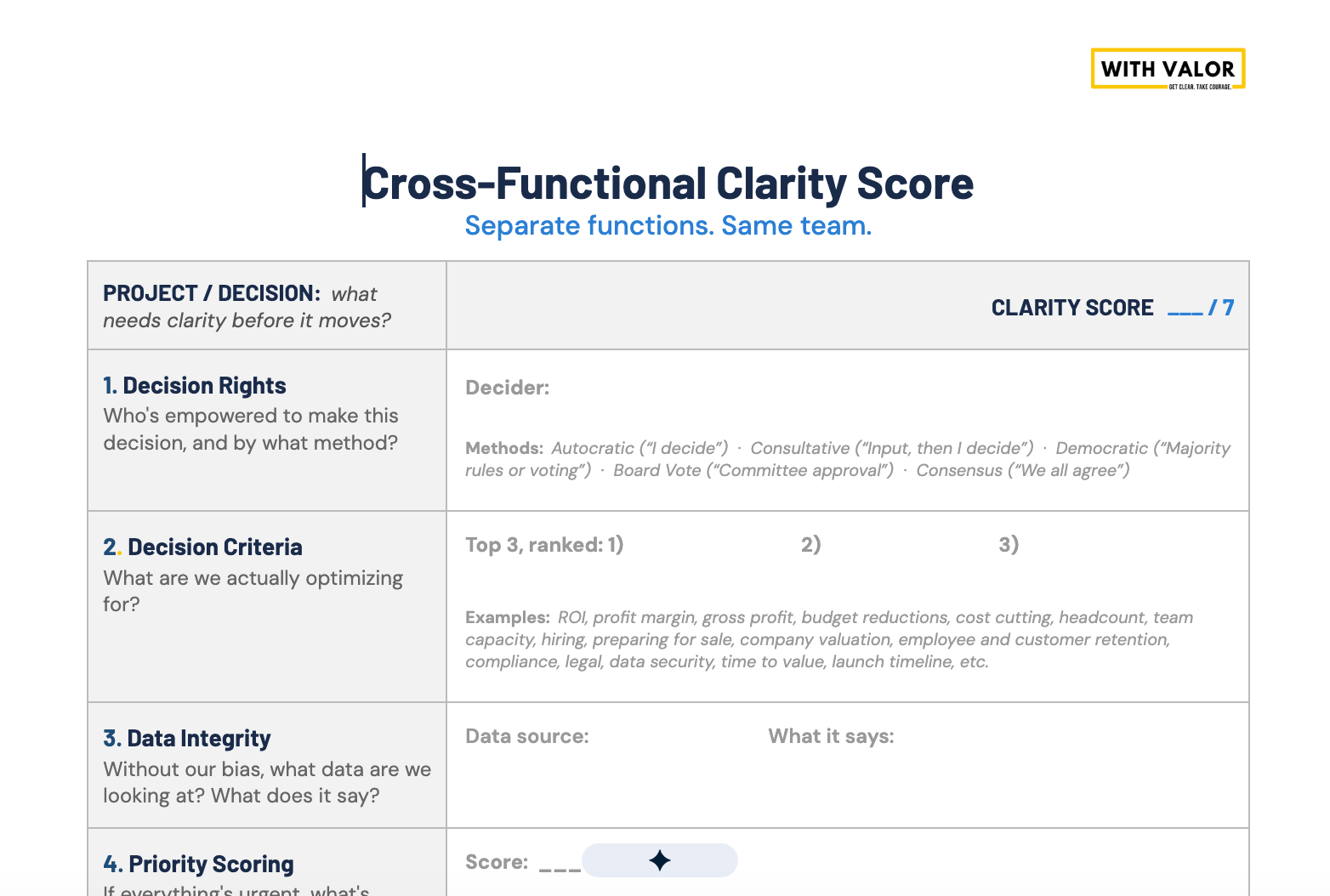
Cross-Functional Clarity Checklist
A quick-reference tool built from Session 2.
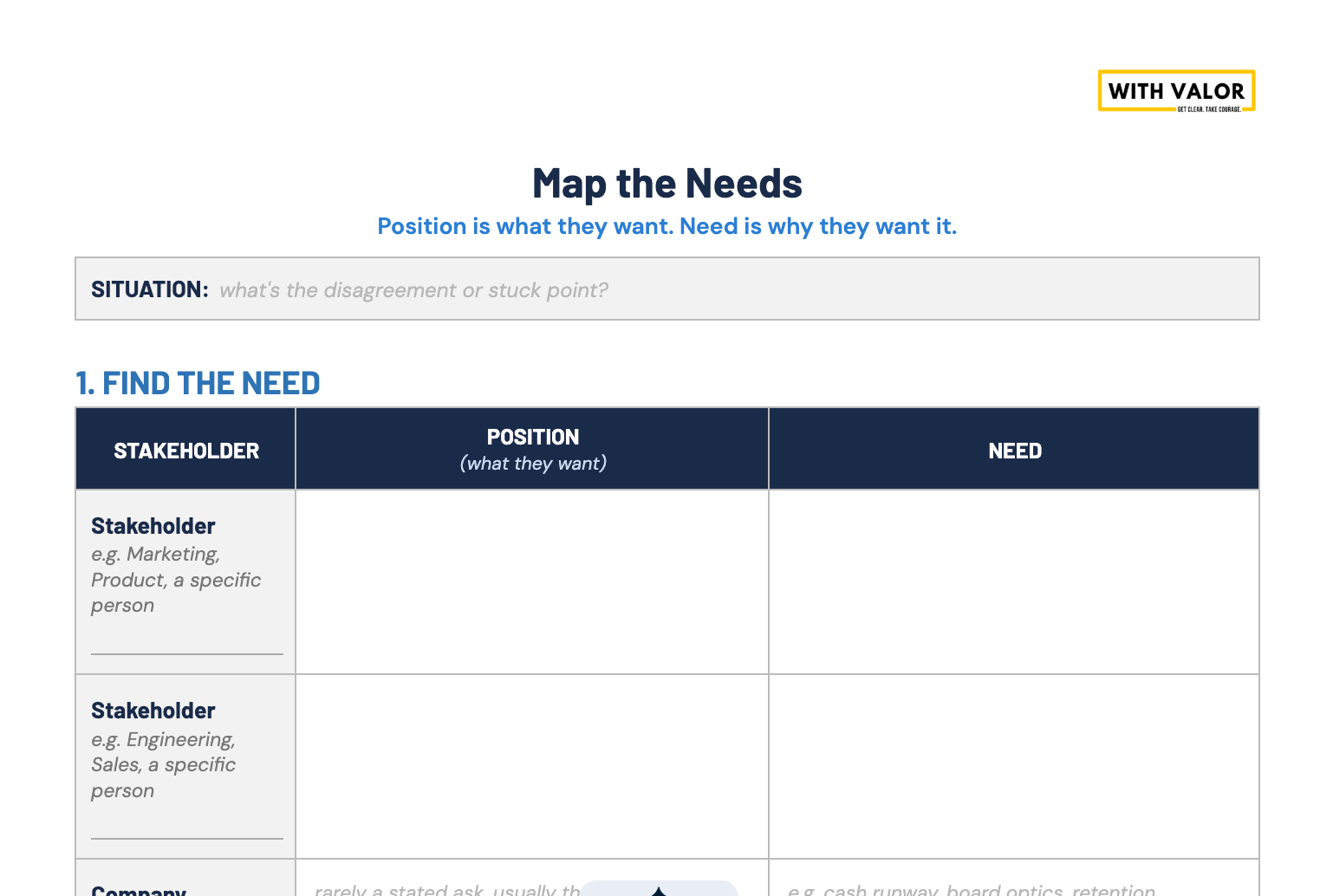
Map the Needs Exercise
Built on Fisher & Ury, used in Session 2.
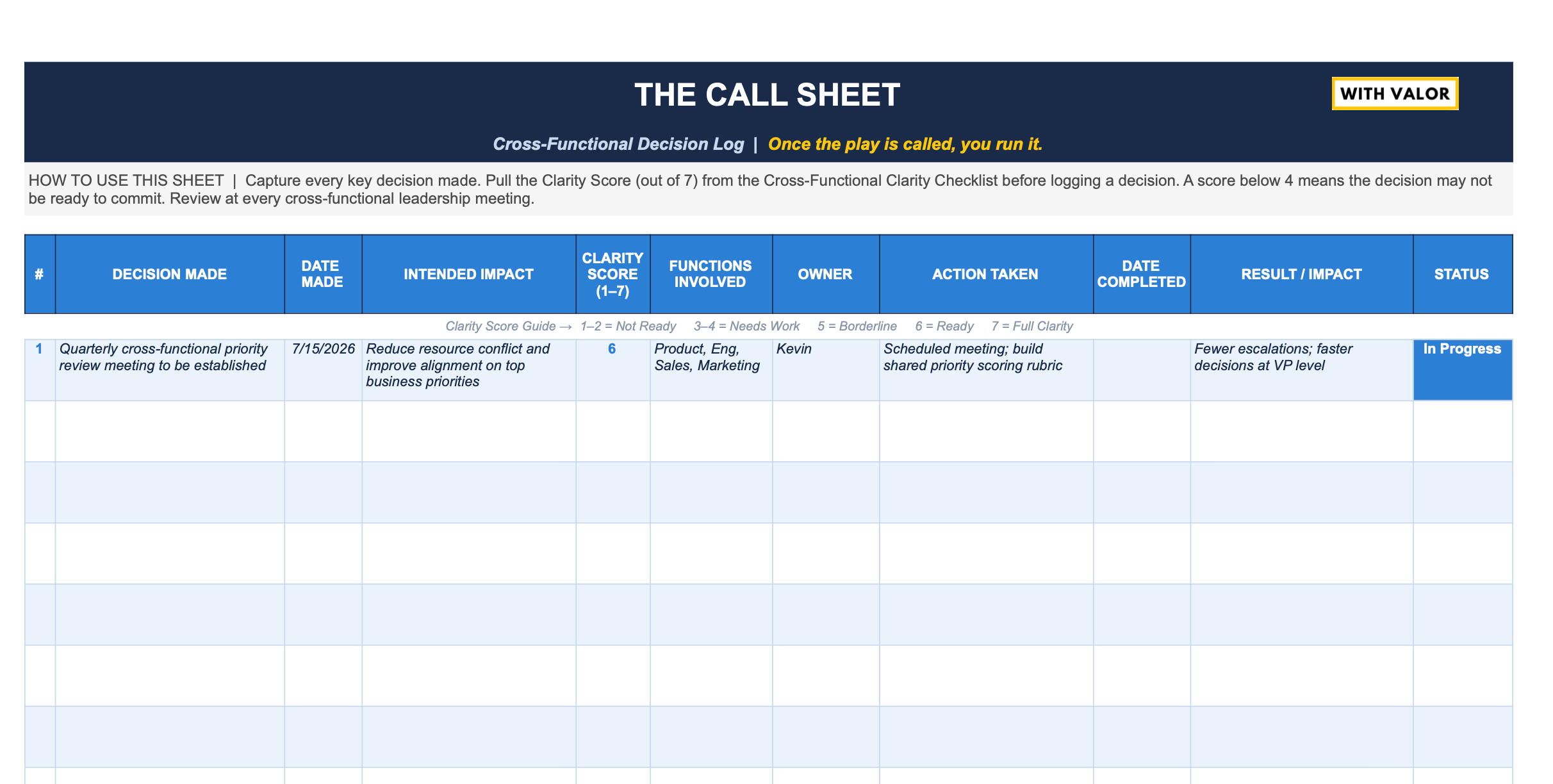
Decision Call Sheet
Decision Log Sample to capture and evaluate decision impact.
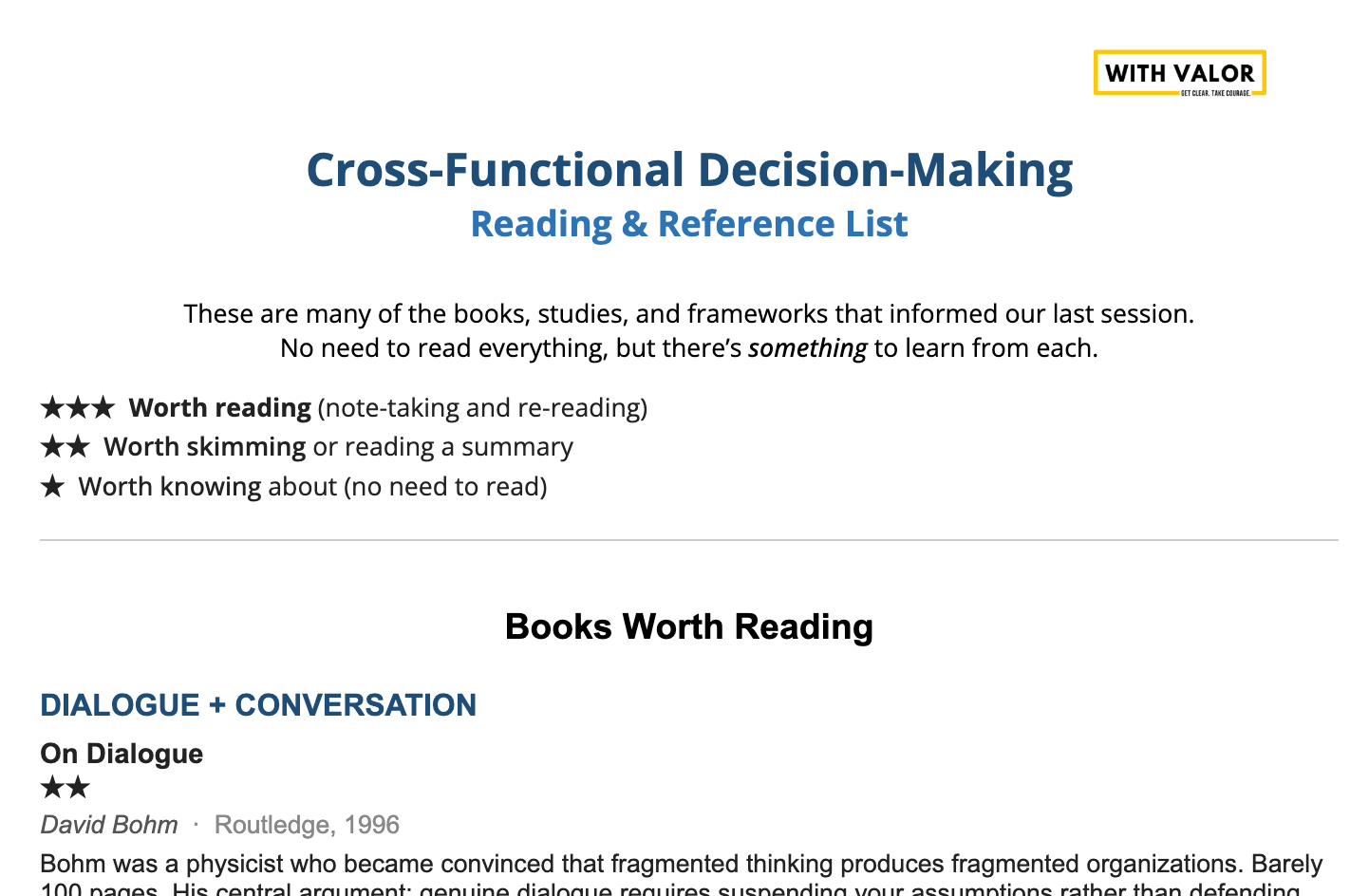
CFDM
Reading List
The books and research behind session 2
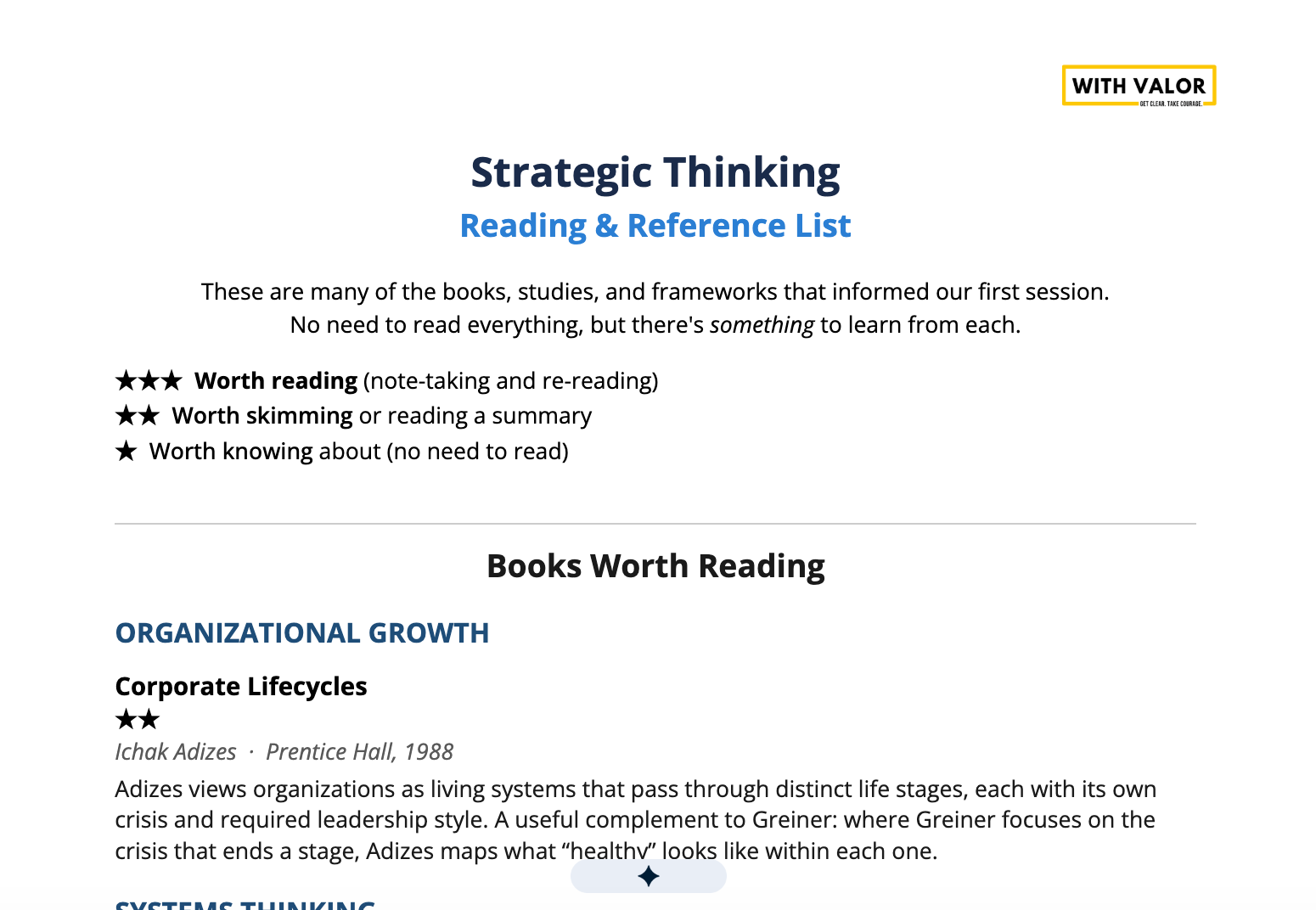
Strategic Thinking
Reading List
The books and research behind session 1.
Book 30 Min w/Kevin
I have feedback for each of you, drawn from our 1:1s, our time together in Bellevue, and what's ahead. If that's useful, please grab 30 min with me.
Book A TimeWhat's Next
Session 3 / Developing Leaders — early Oct. (to be confirmed).